Essential Tactics for Late-Season Northern Pike
If you fly fish in Ontario and DON’T fly fish for pike, what are you doing? Northern pike are some of Ontario’s feistiest and biggest sport fish. They have a massive distribution range across the province and can be found in some beautiful, tough, rugged places.
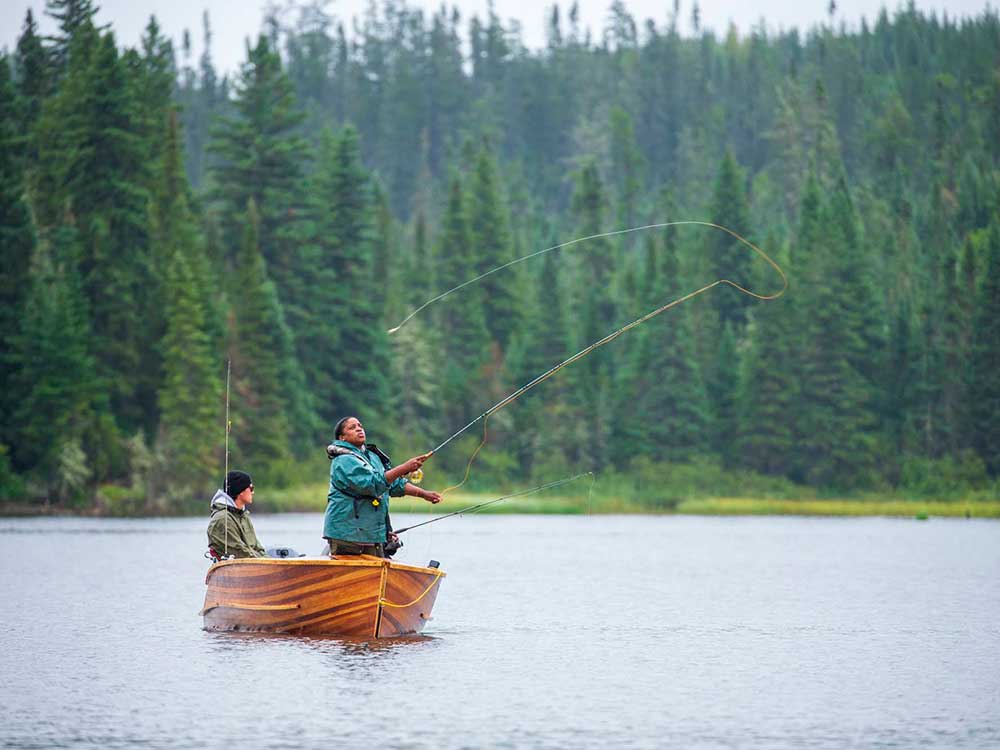
One of the best places to find unpressured waters with BIG pike is Algoma. We’ve chased them across this region, most recently, on a trip we took to Mar Mac Lodge on Esnagi Lake. We’ve been lucky enough to target pike on Esnagi Lake before, in the spring, but our second trip in 2023 was in late August; the fishery is a lot different that time of year. Here are some lessons and tips we learned that can make you successful in the summer, targeting pike on the fly.
1. Habitat
Pike in the spring tend to be shallow; the ice has just come off the lake, they’ve just spawned, and they’re in shallow sandy bays where the water is warmer, and baitfish are present. Pike are ambush predators, meaning they’d prefer to wait in hiding for their prey to come by and pounce on them.
For that reason, a good place to start looking for pike in the summer is weed beds. By the end of summer, these thick weed beds have formed, and pike reside in them, camouflaged and slowly stalking for an unsuspecting meal. You should also try to target weedlines near drop-offs. Pike can use the deeper and darker water at a drop-off as cover to ambush prey from the murky depths.
2. Depth
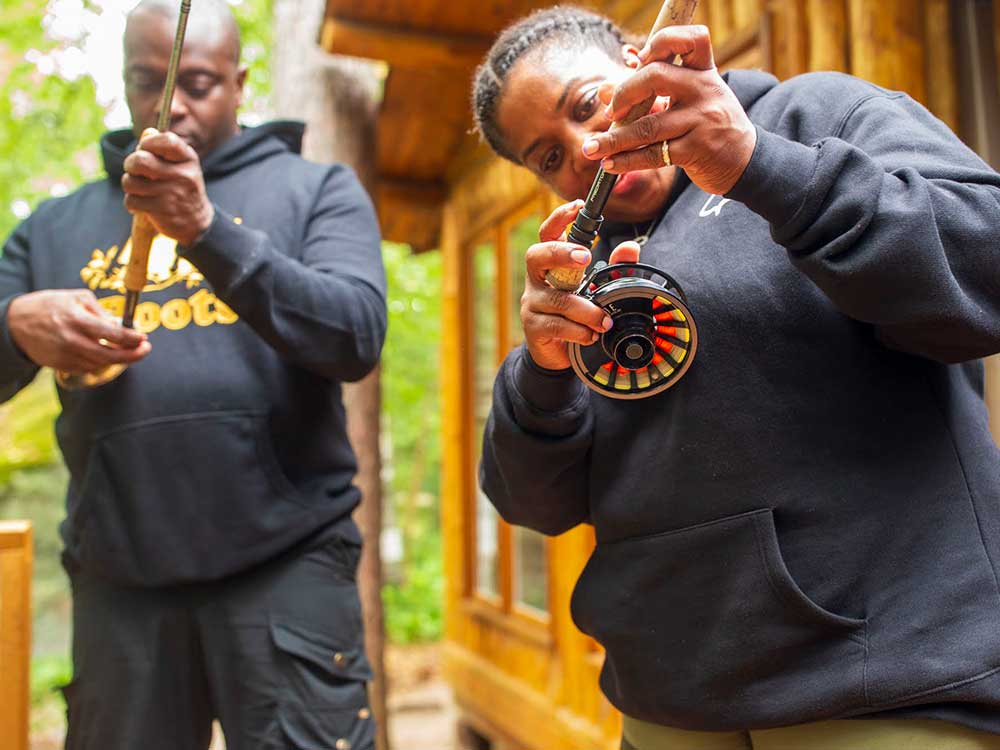
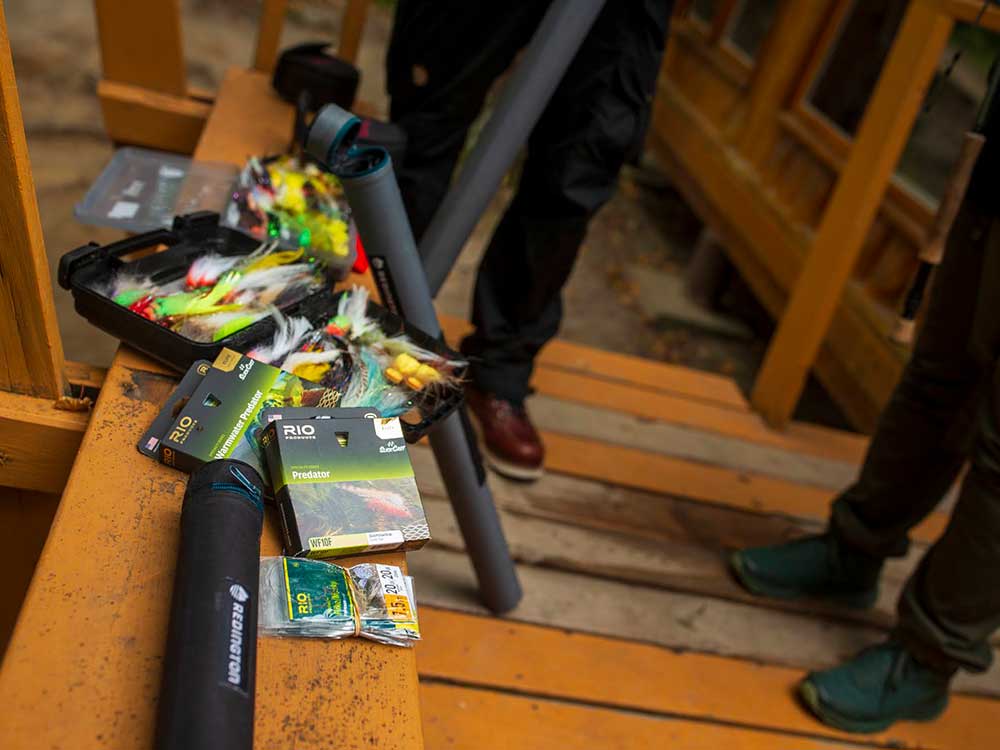
Modern fly line companies have developed special lines for “predator” fishing in freshwater, pike and musky essentially. Often, these lines will come in different sink rates, like floating, intermediate or hover lines that sink at about 1 inch per second. Heavier lines like a sink-3 or sink-5 sink at 3 and 5 inches per second, respectively. If you’re able to, try to have a few rods with lines at different sink rates that can allow you to prospect different depths. The weedline you might be fishing could be in 6 or 15 feet of water, so you want to make sure you’re able to hit those depths. If you only have one line, we’d recommend something like a Sink 3 that will allow you to get down. Big pike won’t be shallow at this time of year, even that far north, so you want to be able to reach them. We’d recommend the Rio Predator Line in the Float/Intermediate/Slow sink.
Another more affordable option than buying several rods and lines might be to explore a sinking leader. These systems can be swapped really quickly at the end of your lines using a loop-to-loop connection.
3. Gear for Teeth!
Pike have razor-sharp teeth, so you should be prepared to deal with this in a few ways. For starters, make sure you’re using a leader with a wire bite guard. Lots of companies like Rio or Scientific Anglers sell pike-specific leaders pre-rigged with knottable wire. When hooked, a pike will shake its head, and oftentimes the teeth will rake against the leader and cut it. Don’t lose your trophy fish to this!
When you do land that gator, make sure you’ve got some tools on hand to help you get the hook out safely, not only for your fingers but also for the fish. A pair of jaw spreaders is essential if the hook is set deeper into the mouth, and a set of long needle nose pliers is key to not cutting your hands. We tend to crimp the barbs of our flies, as that helps with fast hook removal. Always wet your hands before touching fish, try to keep them wet, and practice safe releasing for catch and release.
4. Fly Selection
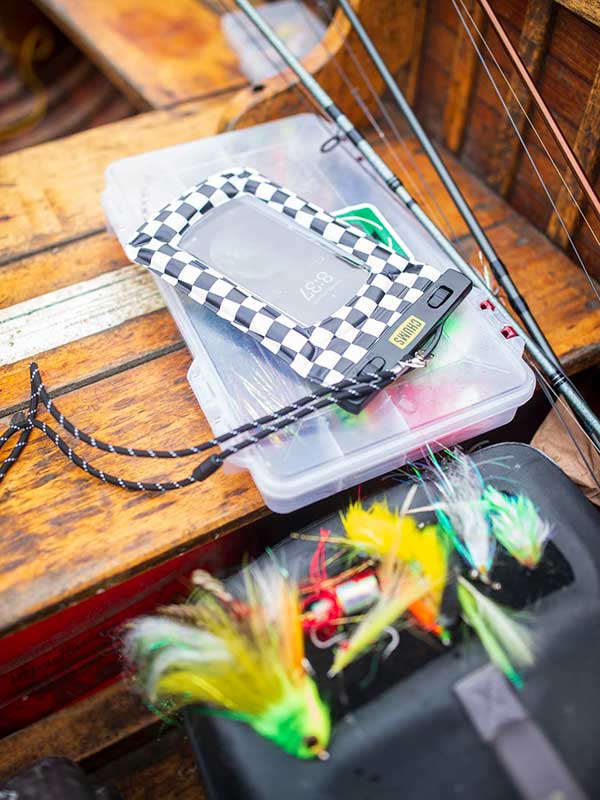
Just like fly lines, pike fly design has come a long way in the last ten years. We think it’s handy to have a box with a variety of flies that look like actual prey, but also a few with louder colours that act as attractors. They don’t necessarily look like anything in the wild, but they tend to play to the hyper-aggressive behaviour of pike to initiate a strike. Remember those Red Devil spoons from when you were a kid? Basically, taking that idea of something loud and flashy and turning it into a fly.
Some of our favourite baitfish patterns are flies like the Game Changer, Yard Sale, and Lefty’s Deceiver in sizes 1/0 and up. Other classics like the Rabbit Strip leech can be very effective. For colours, make sure to have a mix of lighter and more vibrant flies like white, chartreuse, and red, but also dark colours like black or purple, olive, and brown for when the water is murkier. Dark colours for dark days and vice versa.
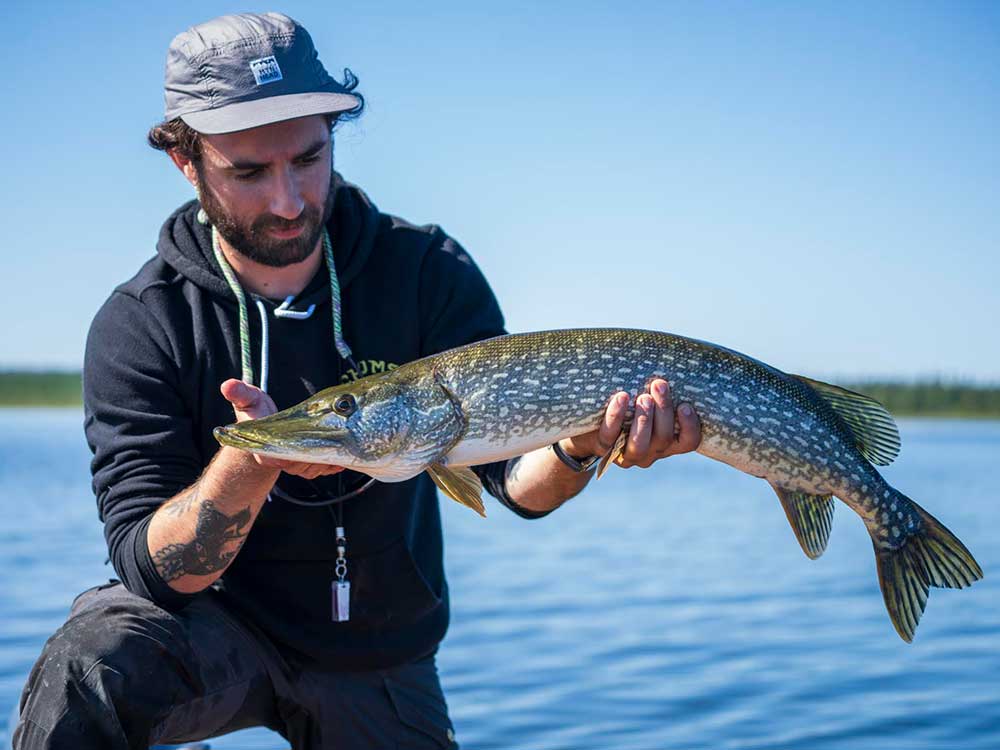
Wherever you are in Algoma, chances are you’re not far from water that holds pike. Cast a line at a weed bed, start your retrieve, and hold on. Once you connect with a pike, you might not want to fish for much else.
Tags
About the Author

We're a fly fishing podcast here to tell your stories. Our goal is to connect the Ontario fly fishing community one episode, video, and event at a time.