Spectacular Wilderness and Big Lake Views
Spectacular scenery, diverse wildlife, unique geology and rare plant life come together on the Slate Islands, one of the most stunning and unexplored groups of islands in Ontario. A paddler’s paradise, this 15-island archipelago is located 12 km south of Terrace Bay, Ontario, in the beautiful and often temperamental waters of Lake Superior, the world’s largest lake by surface area. Not only are the islands home to the southernmost herd of woodland caribou in North America, but they also provide a unique environment for Arctic plants to thrive, all surrounded by stunning crystal-clear waters.
Seeking adventure, a challenge, and a draw to the path less travelled, I headed north for what would be one of the most amazing Canadian backcountry adventures I’ve ever experienced.
The Outfitter: Naturally Superior Adventures
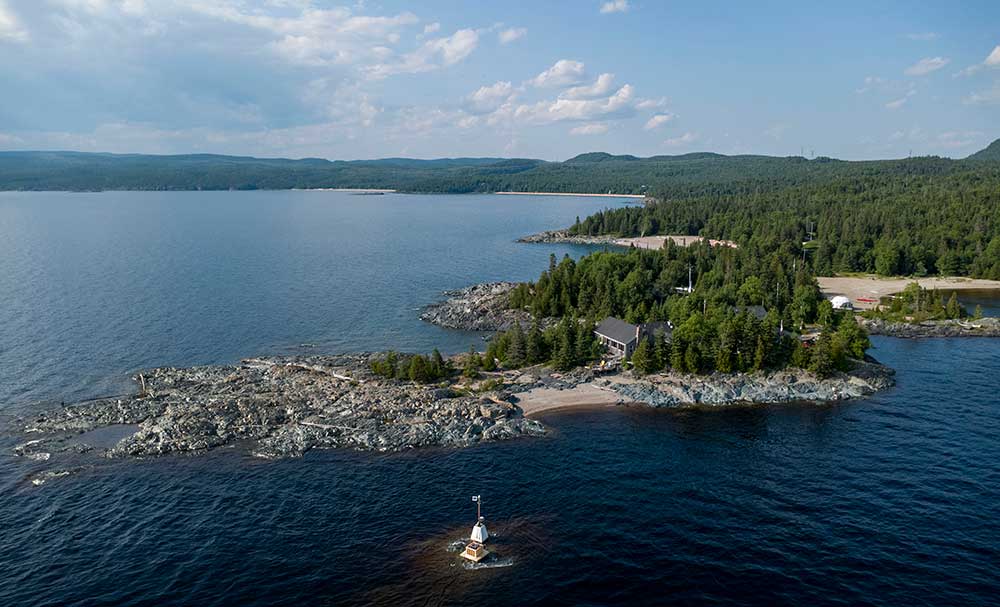
A beacon on the Lake Superior coast near Wawa, Ontario, for over 32 years and an iconic paddling hub in northern Ontario, Naturally Superior Adventures was my obvious choice to explore the Slate Islands. Specializing in paddling instruction, boat and gear rentals, guided day trips, and multi-day expeditions, they are the go-to spot for all things paddling.
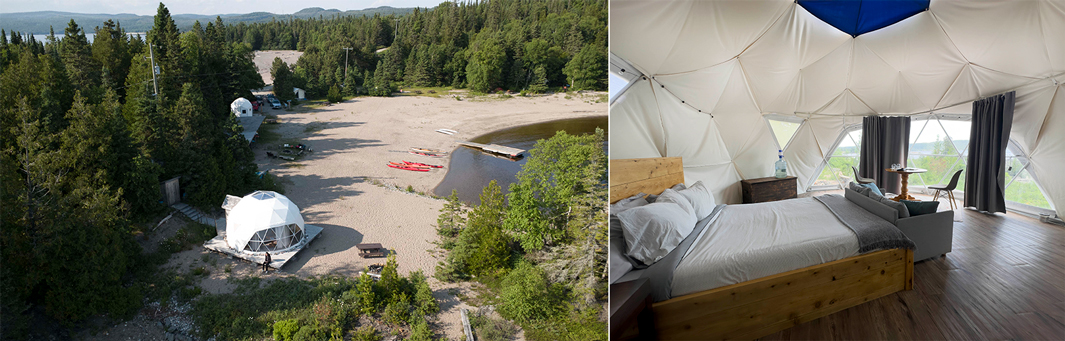
An idyllic place to begin a kayaking adventure, they offer several types of accommodation for pre- or post- trip stays, including fully serviced rooms in the beautiful Rock Island Lodge, beachside prospector tents, waterside campsites, and my home for the night, the spacious and modern GlamDome. To fuel up for the trip ahead, I highly recommend opting for dinner at the lodge. A hearty homemade meal around a communal table is a great way to get to know your fellow paddlers, enjoy the lakeside scenery, and get inspired by others passing through the region on various adventures, both on and off the water.
Guide, Group and Pre-trip Preparation
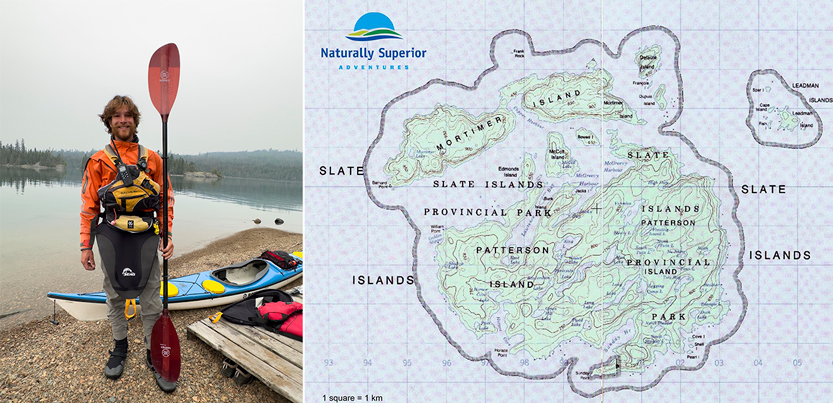
After arriving at the main beach, I was introduced to our paddling flotilla of six: a friendly and adventurous couple from Toronto, an avid paddler from Thunder Bay, an inspirational kayaker pursuing his post-retirement goals of paddling all over the world, and our guide, Wesley. A Paddle Canada Sea Kayak Level 2 instructor with Level 4 skills and an experienced expedition leader at Naturally Superior Adventures, Wesley was an exceptional guide. Displaying an incredible level of calm and confidence in turbulent waters proved to be essential, and his friendly and adventurous spirit was much appreciated in some of the unpredictable waters that were to come.
After a quick overview of equipment, we headed out on a short paddle down the Michipicoten River to Silver Falls to brush up on stroke techniques, safety manoeuvres, and essential skills like the wet exit, crucial to know and experience before hitting the lake.
Although I had previous experience kayaking, good physical fitness, and an ample amount of fearlessness and endurance, this would be my first time officially paddling in a sea kayak, as well as on a multi-day expedition. I was up for the challenge and excited for the unknown and what Lake Superior would throw my way.
Accessing the Slate Islands
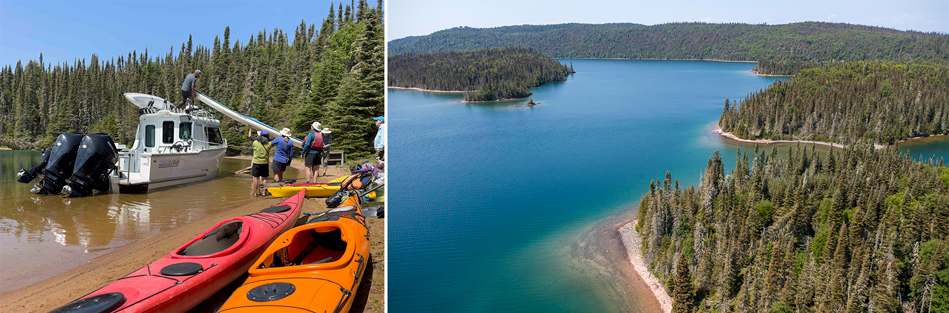
What has kept “the Slates” such a pristine and incredible place to visit is accessibility. Only those willing to face moody Lake Superior by paddle can truly explore the beauty of its hidden coves, pristine beaches, majestic rock cliffs and unique flora and fauna. After a scenic and comfortable drive northwest, kayaks securely in tow, we arrived at the small town of Terrace Bay, the gateway to the Slate Islands.
Experienced paddlers with a calm window of weather and ample time can choose to undertake the 12 km channel crossing by kayak. To get straight to the good stuff, most visitors take the boat taxi with experienced captain Doug on his sturdy steed, “White Knuckles”.
How the Slate Islands Were Formed
Cruising into the inner channel of the Slate Islands gives you a good appreciation for the geology of the archipelago. Created over 450 million years ago, long before dinosaurs roamed the Earth, the islands were formed after a 3-kilometre-wide meteor struck the Earth, creating a vast 32-kilometre-wide crater. This significant impact uplifted a large portion of the Earth, creating the islands that can be seen today.
Secluded Campsites and Starry Skies
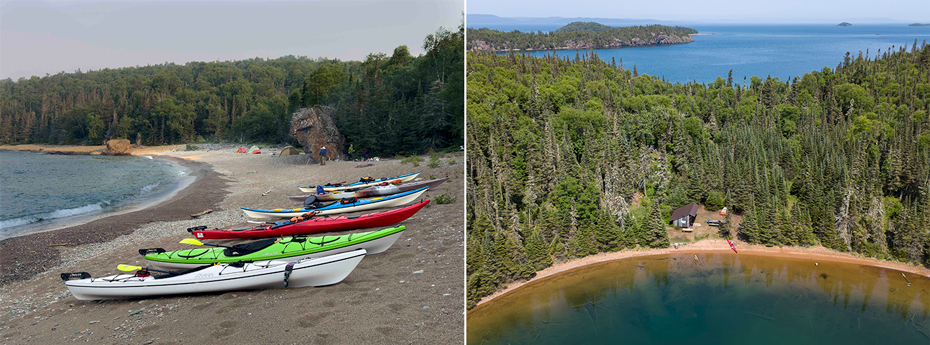
After a successful wet landing and a swift offloading of our boats and gear, our group set up at our first camp. Located in a small sheltered bay on a crescent beach with sunset views, the site was equipped with a small wooden shelter (a bonus I did not expect) and the all-important thunderbox. A short walk through the forest to the east side of the island revealed a beautiful beach dotted with smooth driftwood and interesting rock formations. This became one of my favourite spots for rockhounding, catching the sunrise, and searching for caribou tracks.
While paddling around the island, we stayed at three different campsites, all with their own unique characteristics, from wild and rocky cliffs to secluded beaches tucked into hidden coves. We passed several other campsites along the way, all in beautiful and picturesque locations.
As the campfire wound down each night, the skies lit up in a stunning display of stars, with a clear view of the Milky Way on clear nights. With zero light pollution, the Slate Islands are truly an astrophile and night photographer’s dream.
Exploring the Inner Channel: Traces of Human History
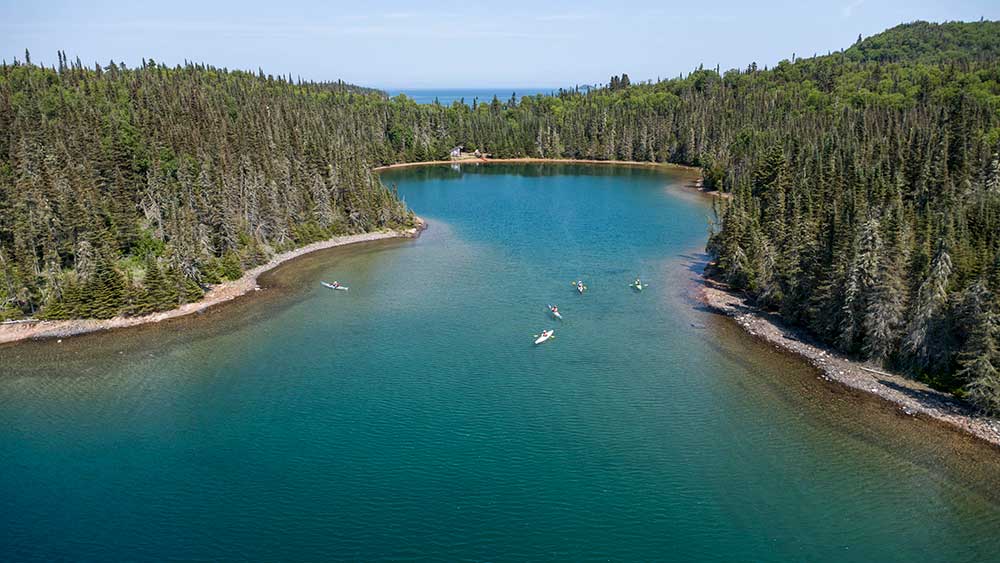
The calm, sheltered waters of the inner channel provided the ideal conditions for a relaxing exploratory paddle of the archipelago’s bays, islands, and hidden coves. While there are currently no human inhabitants of the Slate Islands, the landscape reveals the story of the islands’ rich mining and logging past.
In Jack’s Bay, remnants of an old logging barge sit frozen in time, where the Pigeon River Timber Company’s logging camp once thrived. The Devil’s Roost, a mysterious cabin tucked further back into the bush, gives clues into the perhaps seedier late-night activities of the workers who once stayed there.
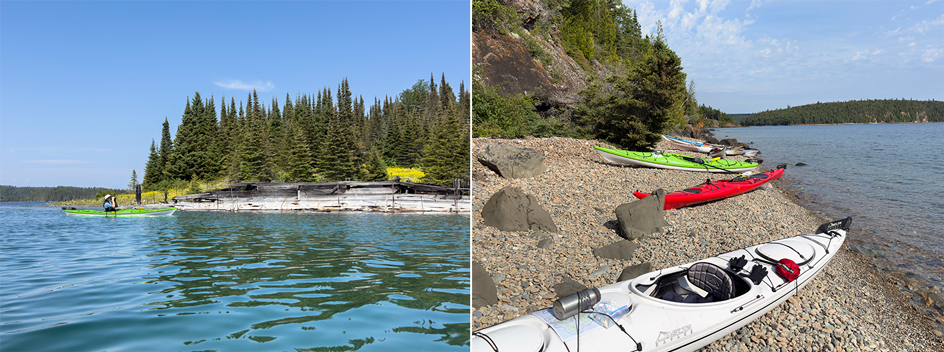
While the islands served as a vital logging hub, copper mining was also a major industry on the Slate Islands until the 1930’s. Abandoned mines can still be found camouflaged into rock walls all over the islands, hidden in plain sight along the rugged shoreline. We stopped at one such cave and slithered our way inside for a fascinating look into what was once an active copper mine.
Along a section of rocky shoreline near Edmonds Island sits a mysterious rock pit known as a Pukawaska Pit. These sacred Indigenous sites date back over 5,000-10,000 years and can be found along the North Coast of Lake Superior. They are believed to be created by the ancestors of the Ojibway People, and their use is unknown.
Paddling further south down the shoreline, we found the remains of an old caribou corral jutting out of the bush. These corrals were built by the Ministry of Natural Resources years ago to herd caribou in an effort to tag, count and monitor their health. You can find several around the island, an indication of the legacy and history of caribou on the island.
Circumnavigating Patterson Island
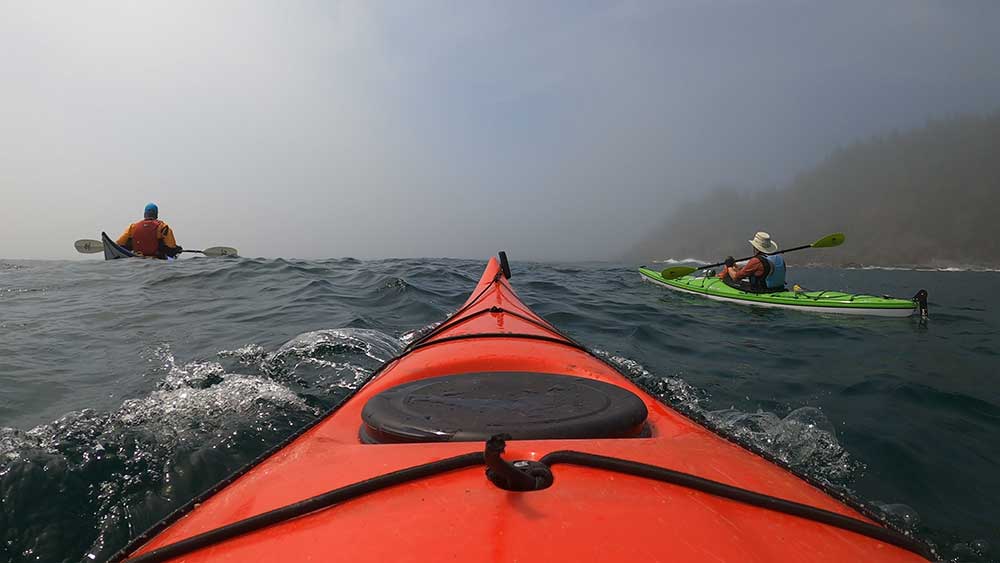
After a thorough exploration of the inner islands and some camp time to wait out a passing storm, we took advantage of the clear weather window to leave the shelter of the interior and begin our circumnavigation of Patterson Island.
Paddling south along the eastern shore of Patterson Island reveals a mystical and magical scene. As the fog clears, the landscape reveals itself – wild, rugged shores, majestic rocky cliffs, secluded pebble beaches, with bald eagles circling overhead. We continued paddling south as swells from the previous day’s storm began to emerge, and made a stop for lunch on Pearl Island. Exploring the island’s rugged terrain revealed some rare plants, unique rock formations, and sweeping views of Lake Superior and the Patterson Island coastline.
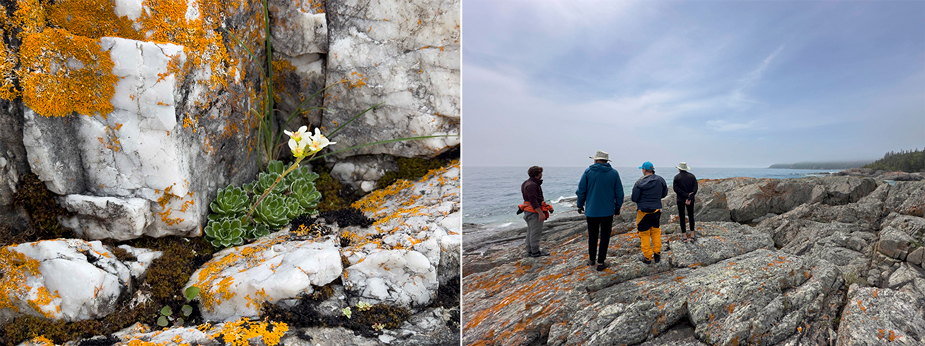
Leaving the sheltered inlet alongside Pearl Island, we paddled into the exposed waters towards Horace Cove, where gentle waves rolled into large 4- to 6-foot swells, and the true power of Lake Superior surfaced. With no experience in water this turbulent, adrenaline and a healthy amount of fear kicked in.
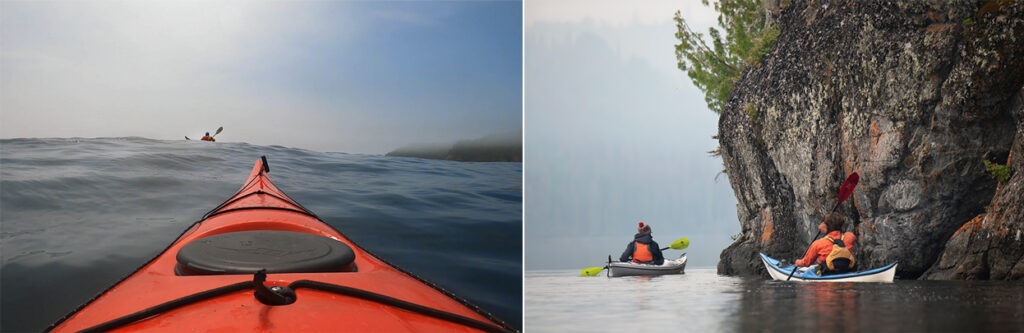
Our guide Wesley provided reassurance and expert instruction on how to navigate these powerful swells, and after a period of time I began to gain confidence. Although very concentrated on navigating the waves – which on occasion were tall enough that I’d lose sight of the person in front of me- I managed to appreciate the beauty of the coastline, which was truly breathtaking.
Hiking to the Slate Islands Lighthouse
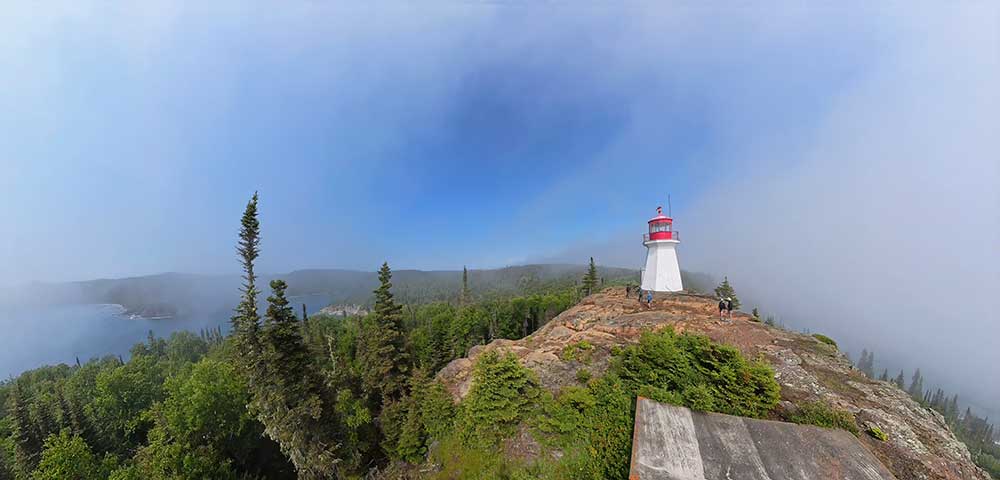
Gliding with the swells finally at our stern, we rolled into Sunday Harbour and headed to our next adventure on dry land to the Slate Islands Lighthouse. A short 1.5 km in-and-back hike from the beach leads you to panoramic views of Patterson Island. Built in 1903, the lighthouse is the highest lighthouse on the Great Lakes, perched 224 ft above the water below, and the view from the top is truly spectacular. Originally staffed by live-in lightkeepers, the lighthouse is now automated, but is open for visitors to roam freely.
Backcountry Dining
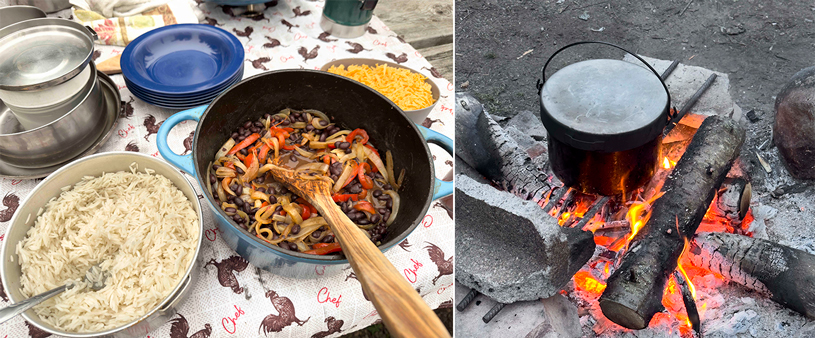
With over 8 km of shoreline to cover by paddle each day (sometimes more), energy levels needed to be kept high, and bodies needed to be sufficiently fueled. The meals we enjoyed were beyond my expectations for backcountry fare, and Wesley’s skills in the backwoods kitchen were nothing short of a Michelin star.
Cool summer temperatures on the islands allowed for a wider variety of meals, with perishables lasting longer than on a typical backcountry trip, and kayak hatches acting as perfect mini fridges. Breakfasts ranged from egg and sausage breakfast bagels to hot oatmeal with fresh apples, raspberries and maple syrup. Lunches were served charcuterie-style, featuring fresh vegetables, cheese, meats and even locally-caught smoked lake trout.
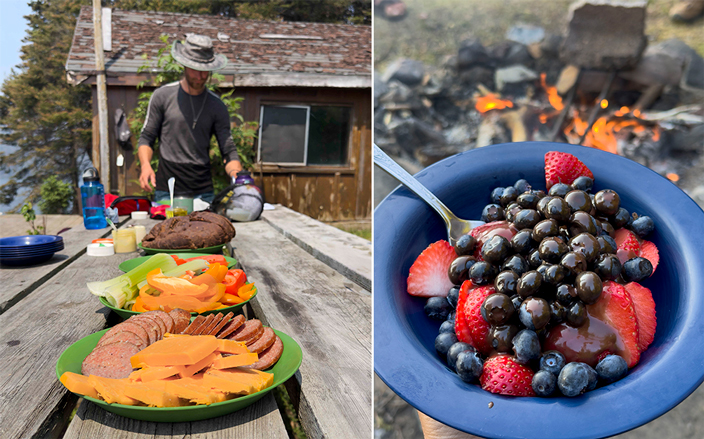
With gale-force appetites, dinners were a much-anticipated part of each day. From the classic “Trip Chicken” and feta pesto pasta to flavourful dal over rice, and chilli with cornbread made right on the fire, every meal was on point. Dessert was never forgotten, and no sweet tooth ever left unsatisfied. We enjoyed berry bowls drizzled with melted chocolate, an amazing backcountry peach crumble that would rival any cobbler on land, and the iconic Naturally Superior Adventures campfire-roasted pineapple.
Geology: Shatter Cones, Rocks and Tombolos
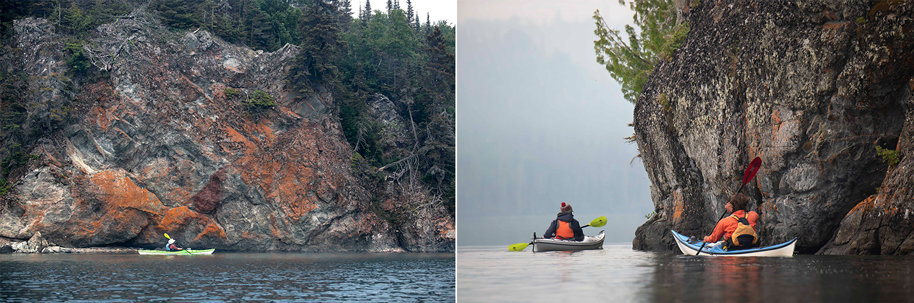
While there is no actual slate on the islands, there is an array of interesting metavolcanic and sedimentary rocks. You’ll find pockets of sparkling white quartz in unexpected places, red jasper scattered along rocky beaches, feldspar, and iron-rich rocks like gunflint. You’ll have no trouble finding a one-of-a-kind rock or two to sneak into your kayak.
The islands feature rare geological structures including shatter cones, pyramid-shaped rock fractures created by shock waves from the meteor impact. The Slate Islands are home to the largest shatter cone in the world at over 9 m high, which we saw on a paddle past the shoreline in McGreevy Harbour.
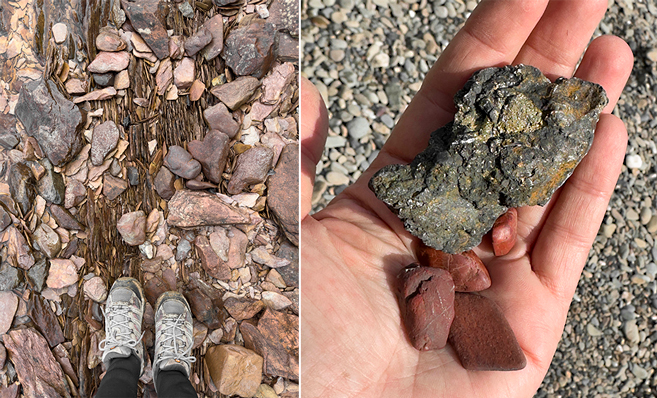
Fairly uncommon in lakes, you can find the interesting phenomenon of a tombolo on the northeastern part of Mortimer Island. A tombolo is a sandbar that connects an island to the mainland. These are usually only formed in ocean environments with strong and consistent wave patterns, but one has formed on Mortimer Island due to the ocean-like force of Lake Superior. There’s a scenic campsite located on the tombolo if you choose to stop for the night, and it’s a great lunch spot or destination for an afternoon paddle.
Wildlife on the Slate Islands
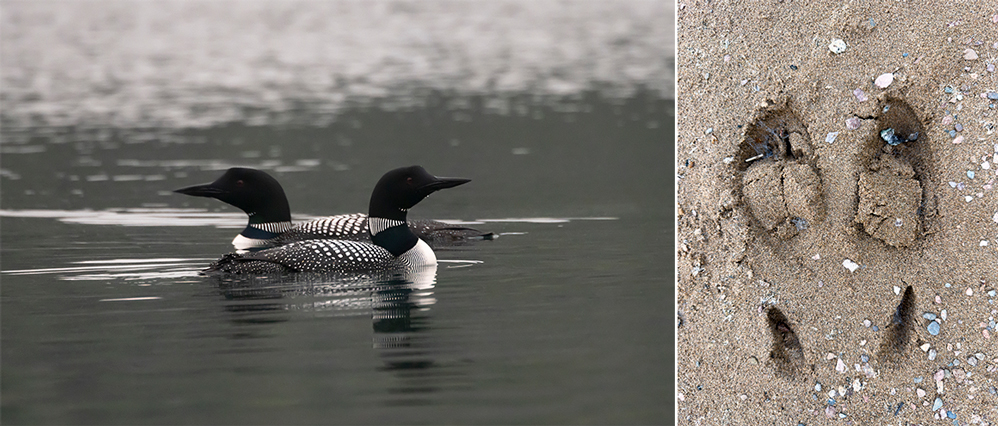
The Slate Islands are home to the densest population of woodland caribou in Ontario, and the southernmost herd in North America. Having migrated to the islands on an ice bridge in 1907, this resilient herd of caribou thrive on the abundance of rich vegetation on the islands. Skillful swimmers, caribou have been seen swimming from island to island. Although they are shy, even verging on elusive, members of our group did manage to see several caribou at a distance on the shoreline. While difficult to spot, traces of their presence are evident throughout the islands, with countless tracks on beaches and a well-trodden maze of trails zigzagging through the forest.
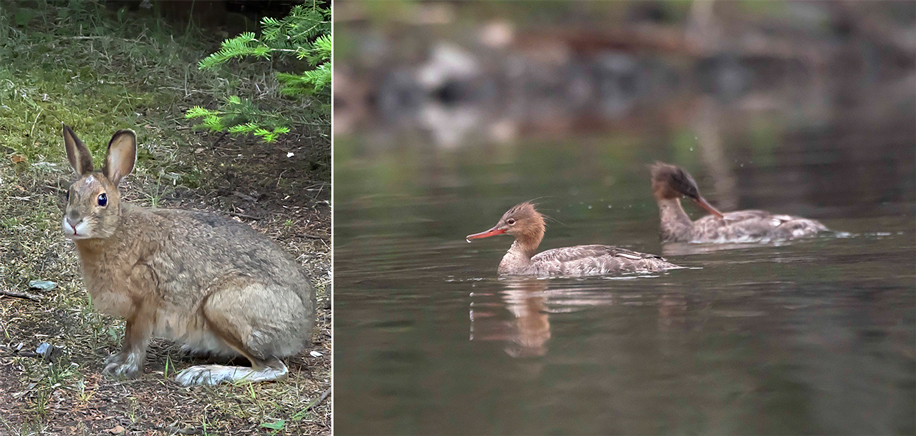
While caribou may be hard to spot, there is an abundance of other wildlife on the islands, including snowshoe hares, beavers, voles, and garter snakes. Birders will love spotting bald eagles high in the treetops, peregrine falcons, loons, mergansers, woodpeckers, northern rough-winged swallows, and the early morning chorus of Tennessee and black-throated green warblers was a beautiful morning alarm.
If you’re an avid fisher, or want to try to catch your dinner, you’re in luck. The Slate Islands are an angler’s dream, with trophy-worthy Atlantic salmon, lake trout, herring and whitefish inhabiting the waters around the island.
Plants and Unique Flora on the Slate Islands
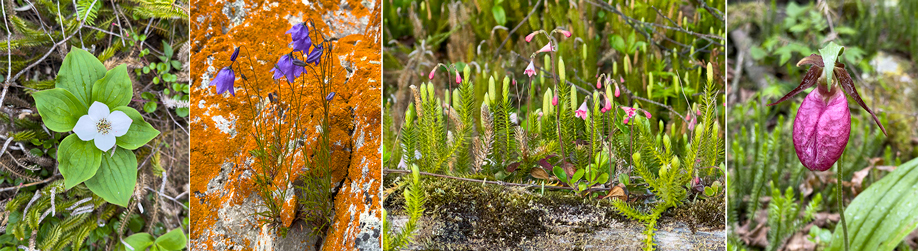
Home to over 250 species of unique plants, the Slate Islands have a wonderful diversity of plant life that can’t be overlooked. While spruce, birch and cedar dominate the landscape, the islands are also home to rare near-arctic and true arctic flora that is usually only found 1,600 km to the north. The cold water of Lake Superior and the harsh conditions of the islands create a unique environment where these plants can survive and thrive. Keep your eyes peeled for alpine chickweed, Dryas drummondii, Saxifraga paniculata, twinflowers, western bunchberry, lady slipper orchids (which were flowering well into July), wild roses and mint, Labrador tea, and carnivorous plants like common butterwort and sundews.
Weather and When to Go
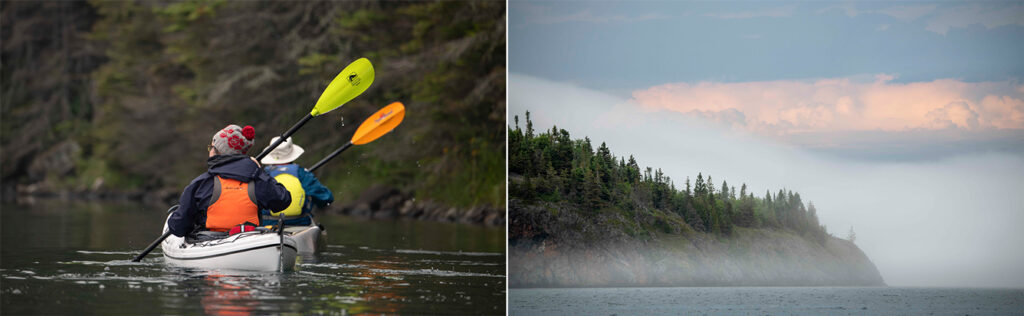
Its exposed location and the cooling effect of Lake Superior make temperatures on the Slate Islands very chilly. Even in the height of summer, weather on the island closely resembles early spring, with temperatures ranging from 10-15°C during the day, dipping as low as 5°C at night. Fog banks can roll in unpredictably, reducing visibility quickly, and storms and wind can whirl in without warning.
Water temperatures are cold – very cold. On average, the water around the Slate Islands generally doesn’t reach above 12°C in the height of summer, and during my visit it hovered around a crisp 4°C in mid-July. As the lake temperature increases slightly throughout the summer, so do the intense storms and unpredictability of the weather. It’s best to visit in July when weather conditions are less volatile.
Water Safety on Lake Superior
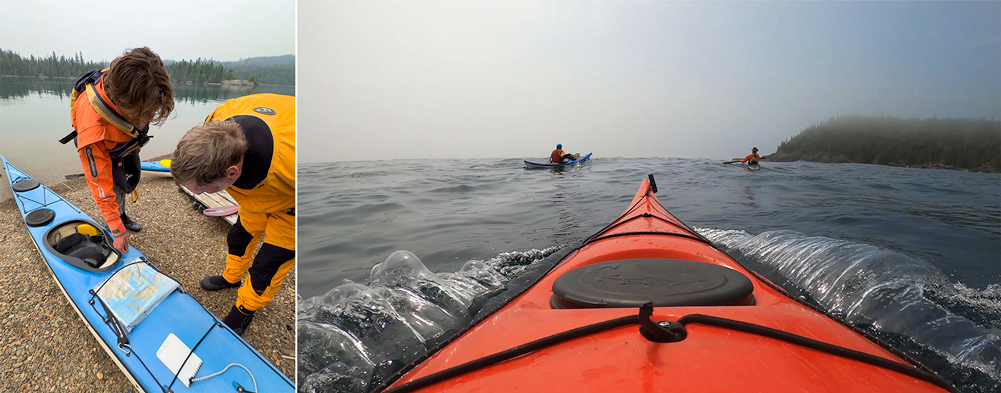
Any activity on water requires pre-planning and safety considerations, but paddling on Lake Superior with its icy waters and constantly changing weather requires extra vigilance. For Naturally Superior Adventures, safety is paramount. Our guide Wesley was always equipped with a VHF marine radio, expedition first aid kit, thermos of hot water, and a Garmin inReach satellite communication device. Daily communication with Naturally Superior Adventures’ home base in Wawa provided detailed weather reports, as well as wave and wind forecasts, which helped us stay safe, plan our route accordingly, and avoid any potentially treacherous conditions.
Expedition Packing Tips and Gear Rentals
Packing for a kayaking expedition to the Slate Islands can be a challenge. With limited hatch space, room for clothes, camping gear, and communal food can be a tight squeeze. When packing, remember that you will be in your kayaking clothes for most of the day, and there is a 100% chance you will get wet. Below are some key packing tips to ensure you stay warm and dry.
Pack two full warm wool base layers – one that you may need to wear in your boat and can get wet, and one full dry set for camp. This includes long johns, a long-sleeve top, and socks. Some other items that I would suggest including on your packing list:
- A fleece or light down jacket
- Hat and wool toque
- Waterproof outer layer including jacket and pants
- 1 pair of shorts and 1 pair of quick-dry pants
- Bathing suit, towel, underwear and wool socks
- 2 non-cotton quick-dry T-shirts
- Dry shoes and wet shoes
- Paddling gloves – something I wish I had by day 5!
I highly recommend acquiring or renting a wetsuit as well as neoprene paddling booties. They provide excellent protection against the cold in wet conditions. As someone who runs cold, this gear was essential to staying warm, and I can honestly say I wasn’t cold once while on the water. Naturally Superior Adventures provides rentals of most kayaking gear you’ll need, from the kayak itself (including paddle and PFD) to wetsuits, paddle jackets and neoprene booties.
Tags
About the Author

Sofie Sharom is a photographer and visual artist. With a focus on wildlife, travel and documentary photography, she has visited some of the most remote corners of the world in search of spectacular scenery, unique wildlife, engaging people and inspiring stories. She created the Project Local Love Explore Canada travel series to support local communities, producers and makers, and shine a light on those making a difference in the lives of others.